Quit After Episode Three: The Growing Habit of Ghosting Your Favorite Shows
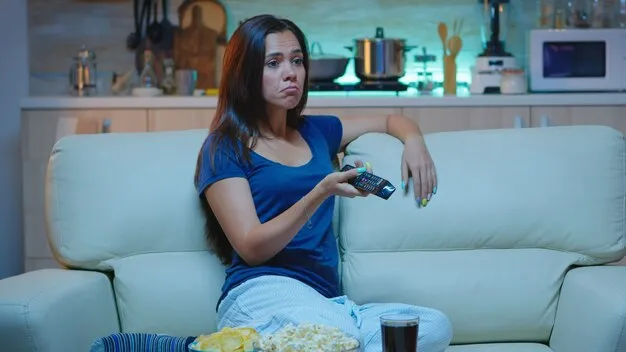
Photo: person bored watching TV remote couch streaming, via img.freepik.com
You know the feeling. You're three episodes into a new show everyone's been raving about, and somewhere between the second commercial break and the end credits, you just... stop. You close the app, scroll through something else, and never go back. No dramatic breakup, no final episode. You just ghost it.
If that sounds familiar, you're not alone — and you're not just being flaky. A growing body of data and a handful of TV researchers suggest that Americans are abandoning shows mid-season at rates that would have been unthinkable a decade ago. The question isn't just why — it's what that says about where television is headed.
The Numbers Don't Lie
Streaming platforms are notoriously secretive about their viewership data, but what's leaked out paints a pretty clear picture. Nielsen's streaming measurement reports have repeatedly shown steep drop-off curves for new series — meaning a show might pull strong numbers for its premiere weekend, then lose 40 to 60 percent of its audience by episode four or five.
A 2023 survey by Whip Media found that nearly 65 percent of American streaming subscribers admitted to regularly abandoning shows before finishing a season. That number was under 50 percent just four years earlier. Something shifted, and it shifted fast.
Part of the story is pure volume. Between Netflix, Max, Hulu, Peacock, Apple TV+, Paramount+, and Amazon Prime Video, Americans now have access to something in the neighborhood of 600 scripted original series per year. That's not counting legacy content, international imports, or reality programming. The sheer mountain of available content has changed the psychological calculus of watching TV in ways we're only beginning to understand.
Decision Fatigue Is Real, and It's Killing Your Watch List
Dr. Amanda Ruiz, a consumer psychologist who studies entertainment habits at a research firm in Chicago, puts it bluntly: "We were not built to make this many micro-decisions every day. Every time you open a streaming app, you're making choices. What to watch, whether to continue, whether something better might be one scroll away. That mental load adds up."
The phenomenon she's describing — decision fatigue — is well-documented in behavioral economics. The more choices we make, the worse we get at making them. And streaming interfaces are essentially decision fatigue machines, engineered to surface endless options while quietly making it harder to commit to any one of them.
"There's also what I'd call the 'better option' anxiety," Ruiz adds. "People abandon a perfectly good show not because it's bad, but because they're convinced something better is right around the corner. That anxiety is actually worse for shows that are pretty good than for shows that are genuinely terrible. You'll finish a trainwreck. You'll abandon a 7-out-of-10."
Are the Shows Actually Getting Worse?
Fair question. Some TV critics and writers argue the real problem isn't the audience — it's the content. The so-called "Peak TV" era produced a glut of prestige-adjacent dramas that looked expensive and moved slowly, banking on audiences who'd been trained by shows like The Wire or Breaking Bad to wait out a slow burn.
But that patience may have expired. Streaming analyst Marcus Chen, who tracks viewership trends for a media consulting group in Los Angeles, says the data suggests storytelling pacing has become a serious issue. "Shows that front-load their hook — that give you something genuinely compelling in the first twenty minutes — retain audiences at dramatically higher rates than shows that spend two or three episodes on setup. Audiences have recalibrated their expectations, and a lot of writers' rooms haven't caught up."
There's also the serialization trap to consider. The binge model encouraged networks and streamers to stretch storylines across entire seasons in ways that worked beautifully for some shows and became a slow-motion disaster for others. When every episode ends on a cliffhanger that doesn't quite pay off, viewers start to feel strung along — and eventually, they stop letting themselves get strung.
The TikTok Effect on Attention
It would be irresponsible to talk about shrinking viewer patience without mentioning what's happened to media consumption more broadly. Short-form video — TikTok, Instagram Reels, YouTube Shorts — has fundamentally rewired how millions of Americans engage with content. When you spend two hours a day watching 15-to-60-second videos, sitting through a 55-minute drama episode without checking your phone becomes a genuine act of willpower.
This isn't just anecdotal. Research from the University of California has shown measurable changes in sustained attention across age groups that correlate with heavy short-form video consumption. And while the oldest viewers aren't immune, the effect is most pronounced among the 18-to-34 demographic — the exact audience that streaming platforms covet most.
"We're competing with dopamine loops," says Dr. Ruiz. "Short-form content is engineered to deliver a reward every few seconds. Long-form storytelling asks you to delay that gratification. For a lot of viewers, that ask is getting harder to meet."
What This Means for the Shows You'll Watch Next
Here's where it gets interesting for anyone who actually loves television. The abandonment trend is already reshaping what gets greenlit and how it gets made. Network executives and streaming development teams are increasingly obsessed with "hook metrics" — internal data that tracks how quickly a new show captures and holds a viewer's attention in those critical first minutes.
The downstream effect is a move toward faster pacing, more immediate conflict, and shorter episode orders. Some of that is genuinely good for storytelling. But critics worry it's also creating pressure to sacrifice depth, nuance, and the kind of slow-build character work that made prestige TV so compelling in the first place.
The irony is sharp: in trying to stop people from quitting, the industry might be making shows that are less worth staying for.
Can Anything Fix It?
Maybe the most honest answer is that the era of appointment television — even the streaming version of it — is just over. Viewers aren't going to suddenly develop more patience, the content library isn't going to shrink, and the algorithm isn't going to stop dangling the next shiny thing in front of you.
What might actually help, according to Chen, is better matchmaking. "The recommendation algorithms are still pretty blunt instruments. If platforms got genuinely good at connecting the right viewer to the right show at the right moment, you'd see completion rates go up. The shows aren't always the problem — it's the mismatch."
For now, though, the ghosting continues. Somewhere tonight, millions of Americans are closing a streaming app on episode three of something that might have been great — and they'll never know how it ended.