Three Seconds to Stardom: How TikTok Rewrote the Music Industry's Rulebook
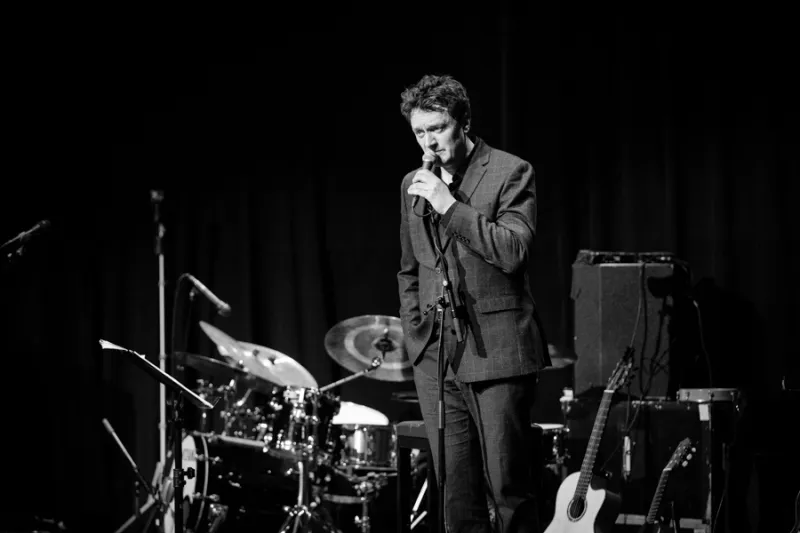
Photo: Tore Sætre, CC BY-SA 4.0, via Wikimedia Commons
Not long ago, making it in music meant one of a handful of things: You got discovered playing a local gig by someone who knew someone. You sent a demo to a record label and waited. Or you spent years grinding a regional circuit until the right person finally paid attention. The gatekeepers were real, they were powerful, and they were almost impossible to get around.
Then TikTok showed up and started kicking the gates off the hinges.
In the last four years, the platform has transformed from a lip-sync app teenagers used during lockdown into arguably the most powerful music discovery engine on the planet — one where a 19-year-old with a USB microphone and a ring light can rack up 10 million plays before a label executive even opens their email on Monday morning.
How the Pipeline Actually Works
The mechanics of a TikTok music breakout sound simple, but the execution is more complicated than it looks. An artist posts a clip — usually 15 to 60 seconds of an original song, often paired with a visual hook, a trending sound format, or a piece of personal storytelling. If the algorithm decides the content is engaging, it pushes it to the For You page of users who've shown similar taste patterns. If those users engage — watch it twice, share it, stitch it, use the sound in their own videos — the algorithm pushes harder. The flywheel spins.
When it works, it works fast. Gavin Magnus, Tai Verdes, Ricky Montgomery, and Dixie D'Amelio all leveraged TikTok traction into legitimate recording careers. More recently, artists like Nicky Youre (whose song "Sunroof" went from TikTok sound to Top 5 on the Hot 100) and Mxmtoon have demonstrated that the pipeline from viral moment to mainstream chart placement is now entirely real — and increasingly reliable.
"Five years ago, a song blowing up on social media was a curiosity," says Jordan Falk, a music industry consultant based in Nashville who works with independent artists. "Now it's the primary scouting mechanism for most major labels. A&R departments are essentially running TikTok monitoring desks."
The Artists Who Cracked the Code
Take the story of Olivia Rodrigo — though her path involved Disney, her initial explosion was deeply tied to the kind of raw, emotionally direct songwriting that thrives on TikTok's authenticity culture. Or consider Lil Nas X, whose "Old Town Road" became a cultural phenomenon partly because TikTok's country-meets-meme energy was the perfect incubator. These are the marquee names, but below them are hundreds of artists who built sustainable careers without ever landing a major-label deal at all.
Charlotte Sands, a pop-punk singer-songwriter from New Hampshire, built a following of over a million TikTok followers before signing with Arista Records — and she was already generating meaningful streaming revenue before the ink dried on that contract. Her leverage in the negotiation room was real, measurable, and entirely self-generated.
"What TikTok gave me was proof of concept," Sands has said in interviews. "I didn't need to convince anyone I had an audience. I could show them."
That shift in negotiating power is significant. Historically, record deals were the mechanism by which artists got resources to build an audience. Now, for a growing number of artists, the audience comes first — and the deal follows, if they want one at all.
The Algorithm Is the New A&R — and That's Not Entirely Good News
Here's where the story gets complicated. For every artist who's used TikTok as a genuine launchpad for a sustainable career, there are dozens who went viral once and couldn't replicate it. The platform's algorithm is powerful, but it's also opaque, unpredictable, and notoriously indifferent to anything except engagement metrics.
This creates a dynamic that some music industry observers find troubling. "You've replaced one set of gatekeepers with another," says music journalist and critic Devon Shaw, who covers the independent music scene for several US outlets. "The old gatekeepers were humans with taste — sometimes bad taste, often biased taste — but humans. The new gatekeeper is an algorithm optimizing for watch time and shares. That's a different kind of lottery, not a fairer one."
The implications for what kind of music gets made are real. Songs that work on TikTok tend to have an immediately distinctive hook in the first three seconds, lyrics that are quotable or meme-able, and a sound that fits neatly into existing trend buckets. That's not a description of every great song ever written — it's actually a description of a fairly narrow band of the musical spectrum.
Artists who make slower, more atmospheric music — jazz, classical-adjacent work, experimental electronic, even a lot of traditional country — find the platform structurally hostile. The algorithm doesn't reward patience. It rewards immediacy.
The Democratization Question
Is TikTok actually democratizing music, or is it just shuffling who wins the lottery?
The honest answer is probably: both, depending on who you ask and what you measure. On the access side, the case for democratization is real. You no longer need to be in Los Angeles or Nashville. You don't need industry connections, a manager, or a budget for professional photos. A teenager in rural Ohio with a good song and a decent phone has a non-zero shot at a global audience in a way that simply didn't exist before.
On the equity side, the picture is murkier. Studies of TikTok's music discovery patterns have noted persistent disparities in how the algorithm amplifies artists across racial and genre lines. Black artists and those working in non-mainstream genres have reported inconsistent reach even with strong content. And the platform's relationship with major labels — which have negotiated preferential licensing deals and maintain significant influence over what gets promoted — means the "independent" pipeline isn't as independent as it looks.
"The labels adapted," Falk notes. "They didn't get disrupted — they got into the disruption business. Now they're funding TikTok marketing campaigns, signing artists specifically to manufacture viral moments, and using the platform as a testing ground before committing real money to a project. It's still an industry. It just looks different."
What Comes After the Viral Moment
Perhaps the most underreported challenge in the TikTok-to-stardom pipeline is what happens after the algorithm blesses you. Building a lasting career in music has always required more than one great song — it requires a live show, a back catalog, a relationship with fans that goes beyond a 30-second clip, and the ability to evolve artistically over years.
TikTok is excellent at creating moments. It's less proven at creating careers. The artists who've navigated the transition most successfully tend to be ones who treated the platform as a door — not the room itself. They used viral traction to build email lists, drive Spotify follows, sell out small venues, and develop the kind of fan loyalty that doesn't evaporate when the algorithm moves on to the next sound.
For the music industry, TikTok represents something genuinely new: a world where the first proof of talent is public, measurable, and entirely outside the industry's control. That's a power shift worth paying attention to — even if the algorithm is still the one deciding who gets to walk through the door.