Too Much of a Good Thing: How Endless Streaming Libraries Are Quietly Making Us Hate TV

Remember when Thursday nights meant one thing? You showed up, you watched Friends or ER or Seinfeld, and that was the plan. Nobody spent forty-five minutes scrolling through a menu trying to figure out what to watch. The show was just... on. And somehow, that felt pretty great.
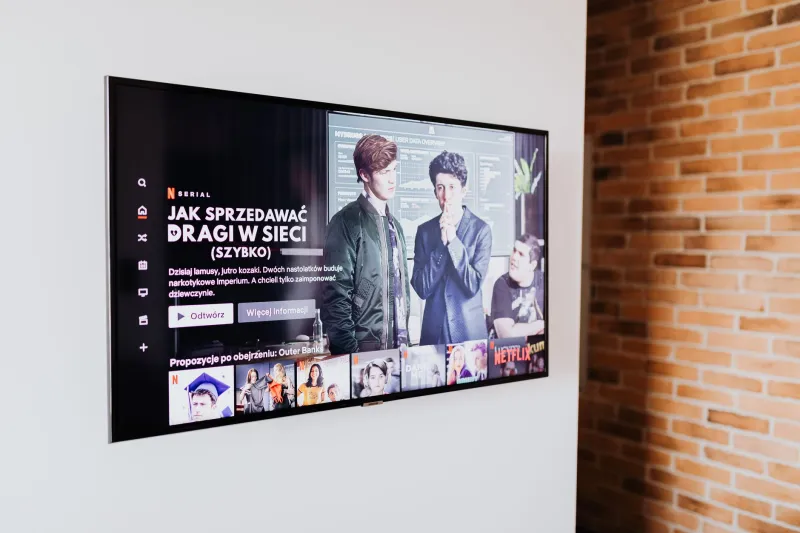
Fast forward to today. You've got Netflix, Hulu, Max, Peacock, Apple TV+, Disney+, and probably a couple of others you forgot you were paying for. Between them, there are tens of thousands of hours of content sitting there waiting for you. And yet — hand on heart — how many times have you stared at that screen, scrolled past dozens of thumbnails, and eventually just given up and rewatched The Office for the fourth time?
You're not alone. And it's not laziness. There's actual science behind why having everything has somehow made watching TV feel like homework.
The Paradox That's Eating Your Evening
Back in 2000, psychologist Barry Schwartz laid out an idea that feels almost prophetic now. In what became known as the Paradox of Choice, Schwartz argued that more options don't make people happier — they make people anxious, indecisive, and ultimately less satisfied with whatever they do choose. His famous jam study showed that shoppers presented with 24 jam flavors were far less likely to buy anything than those shown just 6 options.
Streaming platforms are basically a jam aisle the size of a football field.
When you sit down to pick something to watch, your brain isn't just casually flipping through options. It's running a calculation — factoring in mood, time available, who you're watching with, what you're in the mood for genre-wise, whether you want something you can half-pay-attention-to or something that demands focus. Multiply that by 10,000 titles and the mental load becomes genuinely exhausting before you've watched a single frame.
Why Appointment TV Was Actually a Gift
Here's the thing nobody really talks about: the constraints of old-school network television weren't just limitations. They were, weirdly, a feature.
When Lost aired on ABC in the mid-2000s, you watched it Wednesday nights at 9 p.m. or you didn't watch it. That was the deal. And because everyone was watching on the same schedule, water cooler conversation was real — your coworkers had seen the same episode, and you could actually talk about it. There was a shared cultural moment happening in real time.
That communal experience created something streaming has largely failed to replicate: genuine investment. You were committed to a show the way you're committed to a sports season. You showed up every week. You built a relationship with it over time. Anticipation was part of the package, and anticipation — as it turns out — is a massive driver of satisfaction.
Neuroscientists have noted that dopamine isn't just released when we get what we want. It spikes hardest in the anticipation of reward. Waiting a week for the next episode wasn't torture. It was, biologically speaking, half the fun.
The Binge Problem Nobody Talks About
Streaming platforms sold us on binge-watching as liberation. No more waiting! Watch everything right now! And sure, that felt revolutionary for a while. But what we traded away was that slow-burn anticipation — and with it, a lot of our emotional connection to the stories we were consuming.
When you burn through eight episodes of a show in a weekend, your brain doesn't have time to marinate in it. You don't spend Tuesday wondering what's going to happen next. You don't build theories with your friends. You just... consume and move on. The experience becomes transactional rather than relational.
There's also the paradox of completion. With appointment TV, finishing a season felt like an achievement because it took months. Finishing a Netflix series in three days feels like... nothing in particular. The emotional weight just isn't the same.
When Everything Is Equally Available, Nothing Feels Special
Part of what made certain shows culturally significant was their scarcity. You had to catch The Sopranos when it aired, or you were out of the loop. That urgency gave shows cultural gravity. People prioritized them.
Now, with everything available on demand at any moment, the urgency has evaporated. A new show drops on Friday, and your first instinct isn't necessarily to watch it — it's to add it to your list and get to it eventually. Which often means never. Studies on streaming behavior consistently show that the average subscriber has a watchlist so long it would take literal years to get through, and a significant chunk of those titles will never be watched at all.
We've turned entertainment into a hoarding problem.
The Algorithm Isn't Helping
You'd think recommendation engines would solve this. If Netflix knows what you like, it should be able to narrow the field and make the choice easier, right?
Except that's not quite what happens. Algorithms are optimized for engagement, which means they're designed to keep you scrolling — not to help you make a decision and stick with it. The endless autoplay previews, the rows upon rows of curated suggestions, the "Because you watched..." rabbit holes — all of it is engineered to keep your eyeballs on the platform, even when you haven't technically started watching anything.
The result is that we spend a genuinely alarming percentage of our streaming time not watching, but browsing. Some estimates suggest the average viewer spends nearly 20 minutes just deciding what to watch before they press play. That's one-third of a sitcom episode spent in decision purgatory.
So What Do We Actually Do About It?
Some people have found their own workarounds. Treating streaming more like appointment TV — picking one show per week and committing to it on a schedule — recreates some of that old-school structure. Others set a two-minute rule: if you can't decide in two minutes, you pick whatever was recommended first and you go with it, no second-guessing.
There's also a growing contingent of viewers actively cutting back on subscriptions — not because the content is bad, but because having fewer options genuinely improves the experience. Fewer platforms means less paralysis. It sounds counterintuitive, but it maps perfectly onto Schwartz's research.
The streaming industry, for its part, has started to notice. The shift back toward weekly episode drops — seen with shows like The Bear, Andor, and others — isn't just a strategy for managing subscriber churn. It's an acknowledgment that maybe the all-at-once model wasn't the utopia it was cracked up to be.
The Bottom Line
We built the greatest entertainment delivery system in human history, and we managed to make watching TV stressful. That's a pretty remarkable achievement in the wrong direction.
The good news is that understanding the problem is the first step toward fixing your own relationship with it. You don't need every show. You need the right show, watched with enough intention that it actually means something when it's over.
Sometimes less really is more. Even if the algorithm would very much prefer you didn't think so.