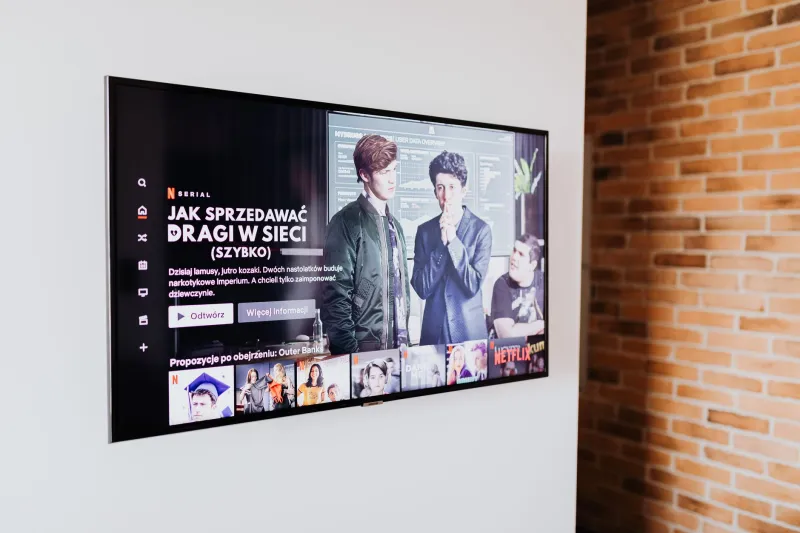
Infinite Options, Zero Decisions: How the Streaming Menu Became the Destination

Picture a Friday night. You've finished dinner, the couch is calling, and you've got a solid two hours to burn on something good. You open Netflix. Then Hulu. Maybe you bounce over to Max, peek at Peacock, and end up hovering on Apple TV+ for a minute before circling back to Netflix again. Forty-five minutes later, you've watched exactly nothing — and somehow, you're exhausted.
If that sounds familiar, you're not broken. You're just dealing with one of the stranger side effects of the streaming revolution: the paradox of choice.
More Than You Could Ever Watch
The numbers are almost hard to process. Netflix alone offers somewhere north of 5,500 titles in the US at any given time. Factor in Disney+, Hulu, Max, Peacock, Paramount+, Apple TV+, Amazon Prime Video, and the growing pile of niche platforms, and you're looking at a combined library that would take several human lifetimes to get through. Not decades. Lifetimes.
The promise was always that this was a good thing. No more waiting for your show to air on Thursday night. No more rewinding VHS tapes or hunting down a DVD. Everything, everywhere, instantly. It sounded like a utopia for couch culture.
But somewhere between the promise and the reality, something went sideways.
The Scroll Is the Show
Psychologists have a name for what happens when you face too many options: choice overload, sometimes called the paradox of choice after psychologist Barry Schwartz's landmark 2004 book on the subject. The core idea is straightforward — past a certain threshold, more options don't make us happier or more satisfied. They make us anxious, indecisive, and ultimately less likely to commit to anything at all.
Schwartz's famous jam study, conducted with researcher Sheena Iyengar, found that shoppers who encountered a display of 24 jam varieties were far less likely to actually buy jam than those who saw just six options. The abundance created friction. Too many paths forward, and the brain starts treating every option as a potential mistake.
Now scale that jam table to five thousand shows, add personalized algorithms that somehow still manage to recommend things you've already seen or never asked for, and you start to understand why the average American reportedly spends nearly 18 minutes per streaming session just browsing — before watching a single thing.
For a lot of people, that browsing session ends with giving up entirely.
Why Your Brain Hates the Menu
Entertainment psychologists point to a few specific mechanisms that make streaming menus particularly brutal on our decision-making wiring.
First, there's the opportunity cost problem. When you pick one show, your brain quietly registers all the other shows you're not watching. In the old cable days, you watched what was on because there wasn't much else. That limitation was actually a feature. It eliminated regret before it could start.
Second, streaming platforms have conditioned us to treat content like a performance. With so much available, the show you choose becomes a statement — about your taste, your mood, your identity. Picking The Bear signals something different than picking a reality dating show, and that social weight, even when you're alone on your couch, adds a layer of pressure that shouldn't logically exist.
Third, and maybe most insidiously, the algorithm itself creates a kind of learned helplessness. When a platform claims to know what you want better than you do, and then repeatedly misses the mark, you stop trusting both the algorithm and your own instincts. The result is a viewer who doesn't trust themselves to pick something good — and so picks nothing.
The Rise of the Rewatch
Here's an interesting data point that the streaming industry doesn't love talking about: rewatching is surging. Nielsen data has consistently shown that catalog titles — older shows people have already seen — dominate actual viewing hours on most major platforms. The Office and Friends spent years at the top of streaming charts. Seinfeld pulled enormous numbers after landing on Netflix.
The explanation isn't complicated. Rewatching eliminates the paradox of choice entirely. You already know it's good. You already know what you're getting. The decision fatigue disappears, and something that should feel like a compromise — watching something you've already seen — becomes the path of least resistance in a world with too many paths.
There's comfort in the familiar, sure. But it's telling that audiences are retreating into the past specifically because the present feels too overwhelming to navigate.
What the Platforms Know (And Aren't Fixing)
Here's the uncomfortable truth: streaming platforms are not particularly motivated to solve this problem. The scroll itself is engagement. Time spent in the menu is time spent on the platform. From a pure metrics standpoint, a user who browses for 40 minutes and watches nothing has still clocked 40 minutes of session time.
Algorithms are also built to maximize what keeps you on the platform, not necessarily what satisfies you. Those are different goals, and the gap between them is exactly where decision fatigue lives.
Some platforms have experimented with solutions — Netflix's "Play Something" shuffle feature, for instance, leans directly into the paralysis problem by removing the choice altogether. It's a blunt instrument, but the fact that it exists at all is an admission that the menu has become a problem worth solving.
Getting Off the Scroll
A growing number of viewers have started treating their streaming habits the way they treat meal planning — deciding in advance what they're going to watch rather than browsing in the moment. Some people keep literal lists. Others designate specific platforms for specific moods. It sounds almost absurdly deliberate for something as casual as watching TV, but it works because it takes the decision out of the decision-fatigue zone.
The broader cultural conversation is shifting too. There's a growing pushback against the idea that more is always better — in streaming, in social media, in digital life generally. The appeal of a single-channel experience, a curated playlist, or even a good old-fashioned recommendation from a friend is having a quiet renaissance precisely because it offloads the cognitive burden that infinite choice creates.
The Irony Nobody Talks About
We built the most comprehensive entertainment infrastructure in human history, and a significant chunk of us are using it to watch the same ten shows on repeat while scrolling past thousands of things we'll never touch.
That's not a failure of content. There's genuinely remarkable stuff buried in those libraries. It's a failure of the delivery model — one that prioritized volume over experience and assumed that more options would automatically translate to more satisfaction.
The streaming era gave us everything we ever wanted. The catch nobody mentioned is that "everything" might have been too much all along.